Things to Do in Rio de Janeiro: What I've Actually Done in Three Trips
I've been to Rio three times now (2023, 2024 and 2025), and I've done a lot. Some of it was worth every penny, and some of it I'd tell you to skip. Here's all of it, with what I paid. Most of these I booked as Airbnb Experiences. If you're wondering whether it's safe, I wrote about that in Is Rio Safe? What I Tell Friends After Three Trips.
On this page
- Hike Sugar Loaf instead of taking the cable car up
- Rocinha favela tour
- Tijuca Forest and the waterfalls
- Little Africa and the African heritage tour
- Samba at Pedra do Sal (it's free)
- Lapa at night
- The Selarón Staircase in Lapa
- The Royal Portuguese Reading Room downtown
- Helicopter over Christ the Redeemer
- A capoeira class
- The beaches
- A Flamengo game at Maracanã
- Watching a BJJ tournament
- Where I eat after all that
Hike Sugar Loaf instead of taking the cable car up
What I paid: $83 a person (2025)
I did this on my last trip. The hike starts in Urca, at the foot of the mountain. It wasn't hard at all, and we were only roped in for a small part of it.
There was one section where I was like, "Yeah, I don't know about this." The guide kept telling us to find the features in the rock, stick our hiking boots into them and trust the grip. When I looked back down, I thought, "Man, if one of us slips, it's over with." My girlfriend was in front of me, and I did that on purpose. If she slipped, I wanted to be right there to grab her. What am I gonna tell her family otherwise?
But it was fun. At the top there's a platform with a restaurant, so we got a couple of drinks and some light finger food. We tried to walk back down, but it got pitch black fast. The police at a checkpoint stopped us, super friendly about it, and told us to take the cable car. So we rode it down.
Tips: wear real hiking boots, because you'll be trusting the grip. And plan on the cable car down, especially if you start in the afternoon like we did.
Rocinha favela tour
What I paid: $30 a person (2025)
We rode motorbike taxis up, and it's a pretty sanitized tour, but you still see things. I saw a guy counting money with a gun on his hip. My uncle and my girlfriend didn't even notice.
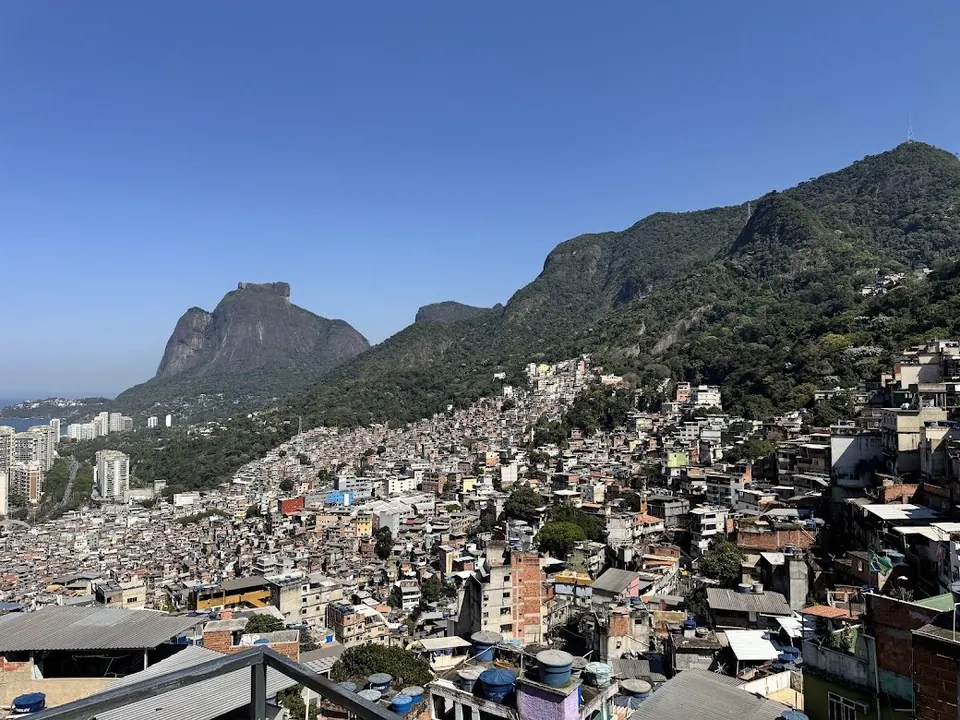 The view from up in Rocinha
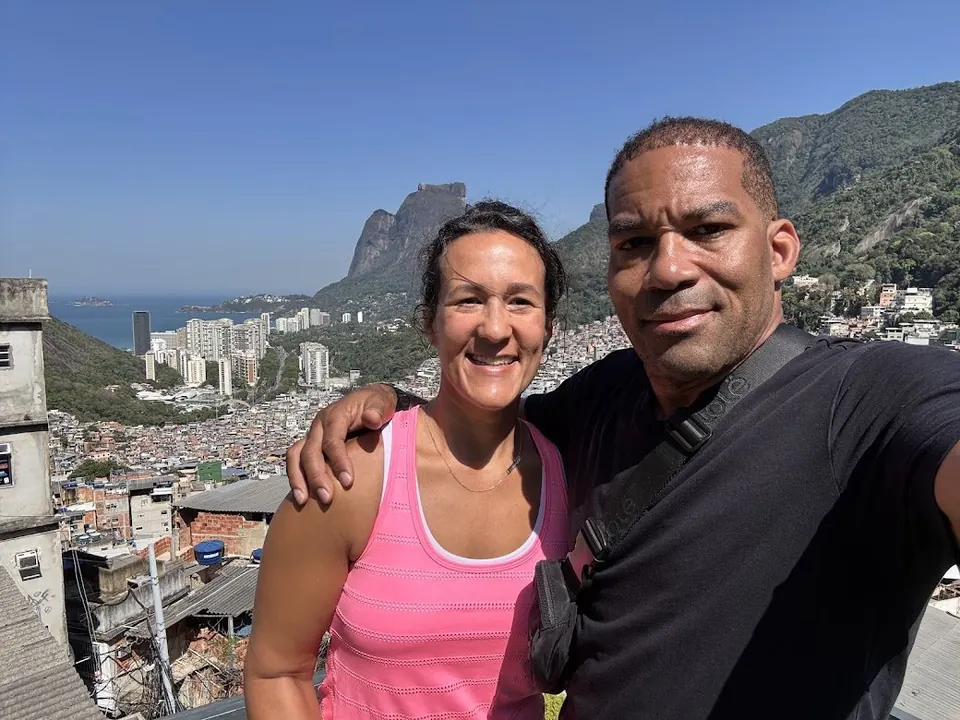 Me and my girlfriend at the top
Don't have your phone or camera out waving it around. There are things going on that they don't want you to see. The pictures here are the views and the streets, nothing else.
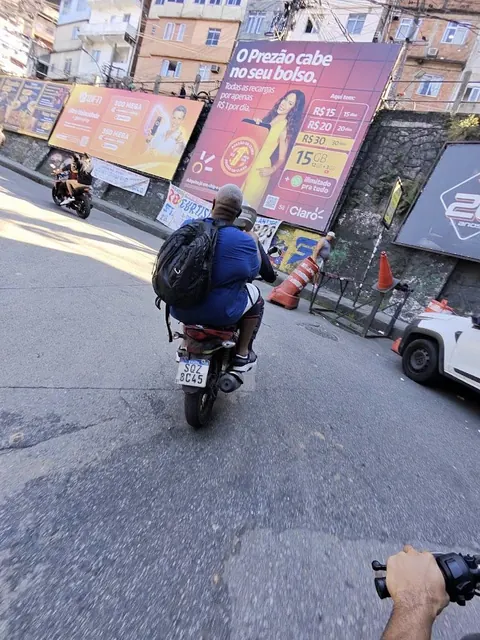 A motorbike taxi in Rocinha
I went back into Rocinha later for a favela party and ate at the Chinese restaurant up in there. It's everyday life going on. You also see the guys who run things, with their soldiers carrying assault rifles and gold chains on. The fanciest jewelry I saw in all of Brazil was in the favela.
Tap to play with sound: a concert I went to up in Rocinha.
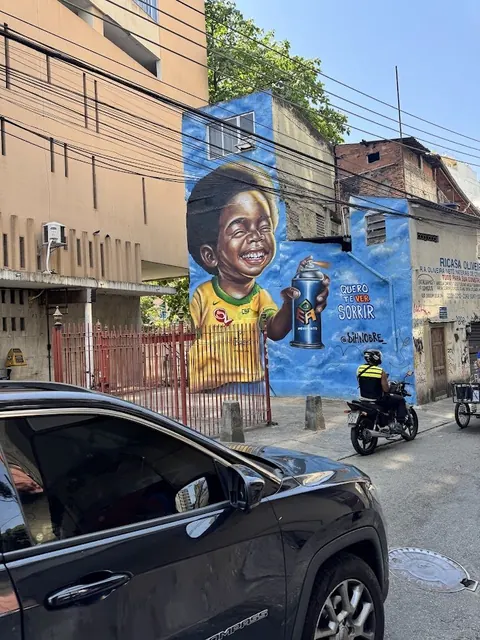 Street art on the way through
A little background, because it changes how you see the place. Rocinha is the biggest favela in Brazil. The 2022 census counted more than 72,000 people living there, and Rio has around 1,000 favelas in total (Britannica). On my Little Africa tour, the guide explained where a lot of them came from: when slavery ended in 1888, freed people got no land, no money and no schooling. Nobody was living on the hills, so people took scrap wood and built their own houses up there. A lot of what you see today grew from that, plus waves of people moving in from the countryside later on.
Because the government mostly isn't there, the favela runs its own water, electricity and everything else. You'll see wires tapped off the main lines everywhere you look.
I also went up into Vidigal, another favela, and filmed it for my channel:
My Vidigal guide said some things that stuck with me:
- The tour should give back. Their tour money funds an ecological park that used to be a trash dump (he said more than 10,000 pounds of garbage came out of it) and a Children's Day event for 5,000 to 6,000 kids. His point was, if your tour company can't tell you what it does for the community, why are you doing that tour?
- Airbnb is changing the favela. He counted about 125 Airbnbs that went up in Vidigal in two and a half years. When one house sells for five times the price, the neighbors stop renting to locals and sell too. I book Airbnbs, so that one made me think.
- Some of these buildings are scary. He showed us buildings of seven and even eleven stories on foundations barely a meter deep. The state has started tearing down irregular buildings, especially the tall ones.
Tijuca Forest and the waterfalls
What I paid: $63 a person (2025), about five hours
On the last trip, my girlfriend and I did a waterfall hike in Tijuca National Park, a huge rainforest right inside the city. Our guide, Felipe, met us at 8 AM in the Horto, up the road from the Jardim Botânico, and we hiked part of the Transcarioca, the long trail that crosses the whole city, out to the Jequitibá falls.
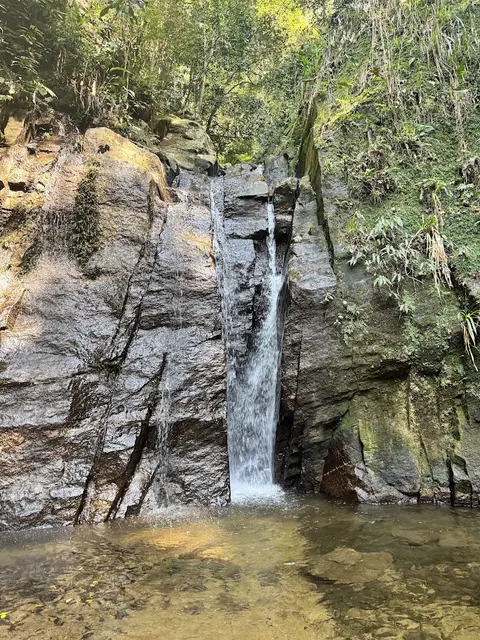 The first waterfall, about an hour in
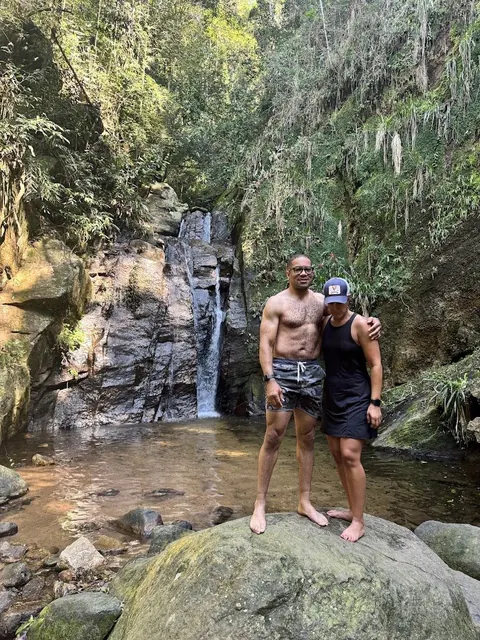 Me and my girlfriend at the first falls
Most of this forest was actually replanted. The hills were cleared for firewood, coffee and cattle, and Rio started running out of water. In 1861 Emperor Pedro II took the land back and ordered it replanted. From 1861 to 1887, six enslaved men planted more than 100,000 trees. Today it's often called the biggest urban forest in the world, at about 15 square miles.
Felipe knew every plant on the trail. A few of the things he showed us:
- The juçara palm. It's the Atlantic Forest's cousin of the açaí palm. People cut so many of them down for hearts of palm (you have to kill the tree to get it) that it's now endangered and protected. He said the juçara heart of palm is supposed to be the most delicious, and definitely the most expensive.
- The garlic tree. When it's wet, it really smells like garlic. You can smell it before you see it.
- The snake. We saw a frog (a rã in Portuguese) and a snake (a cobra). It wasn't venomous. It was lying in the leaves and blended in so well that I'd have walked right past it on my own. I got a little close for a better look, and Felipe had me back up.
Tap to play: the snake in the leaves, with Felipe explaining (in Portuguese) how well it hides.
He also had stories. He once spent a month in an indigenous territory in the Amazon, helping a German filmmaker. They ran out of water on a long hike, so one of the guys cut open a vine and they drank from it. His review: it tasted really bad.
We also passed an offering tucked between the roots of a huge tree, right next to the trail. It's easy to miss, so I circled it below. You can make out a little figurine and a few other things, maybe a coconut and a small bottle.
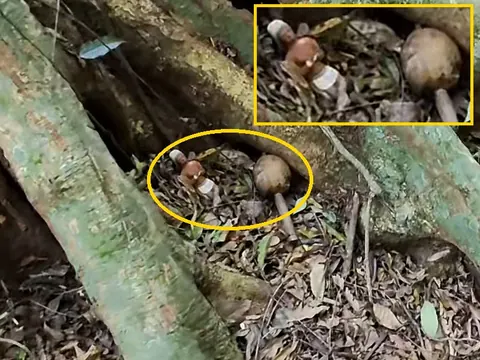 The offering at the base of the tree (close-up in the corner)
If you've never seen one: people who practice Afro-Brazilian religions like Umbanda and Candomblé leave offerings out in nature, at places tied to a specific orixá (spirit). In Umbanda, Oxóssi is the hunter who lives in the forest, and Oxum goes with rivers and waterfalls. So a rainforest full of waterfalls is a pretty natural place for one. I don't know who left this one or what it was for. If you come across one, just look and leave it alone.
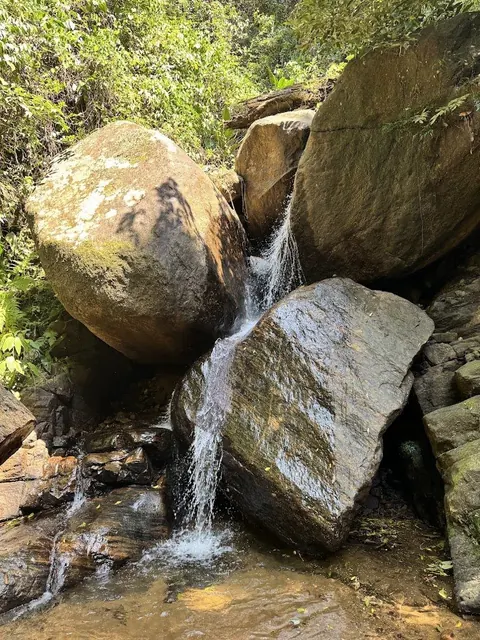 The falls run through these huge boulders
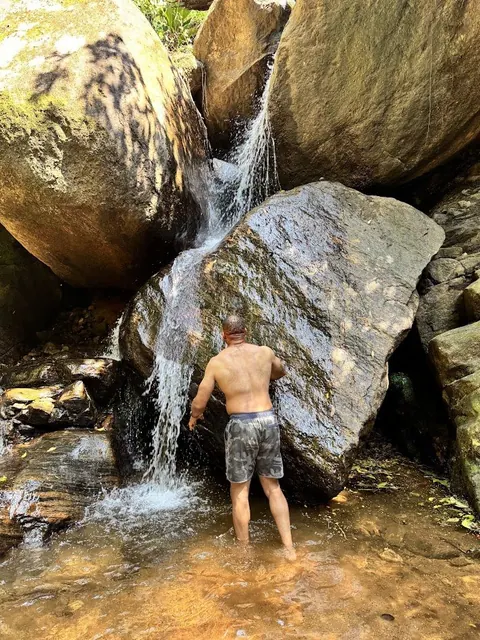 Me at the falls
At the falls, we spent a little time in the water. It's cold, clear and a nice break from the heat.
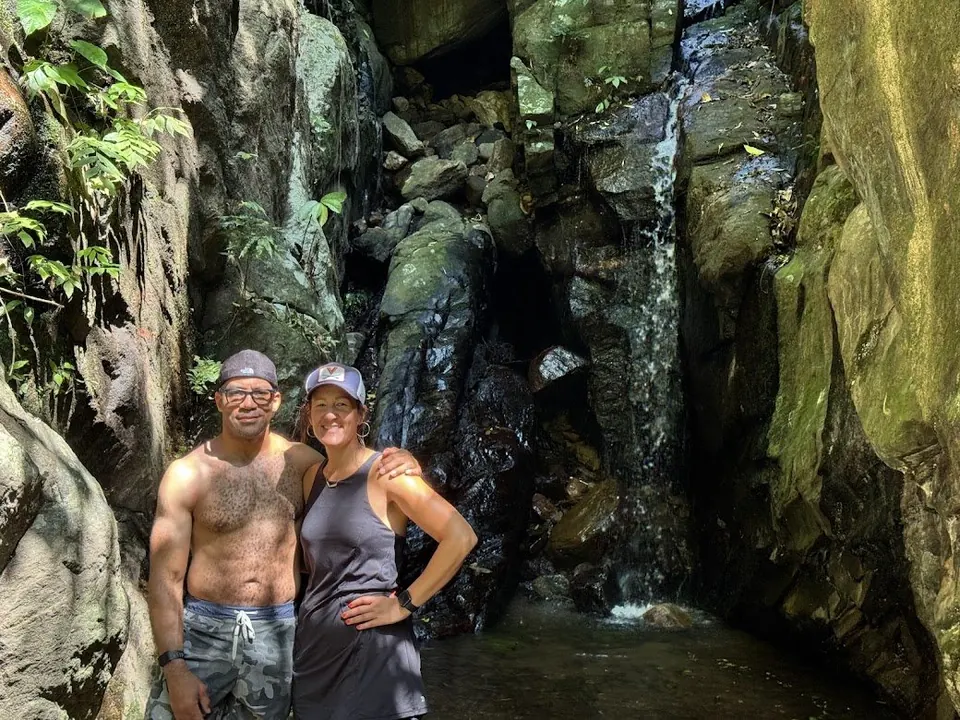 Squeezed in between the rock walls at one of the narrower falls
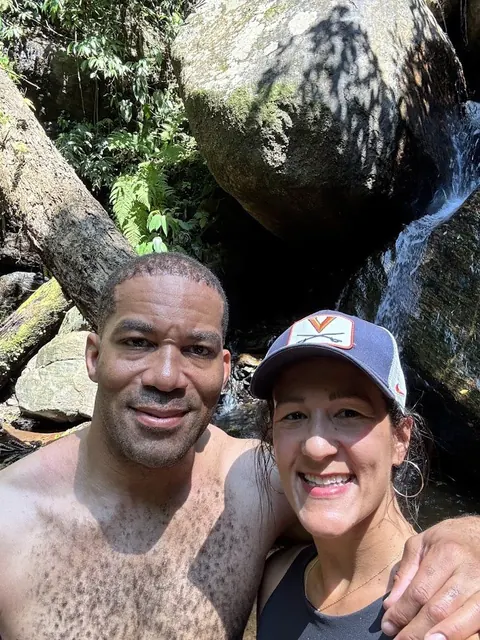 Worth the 8 AM start
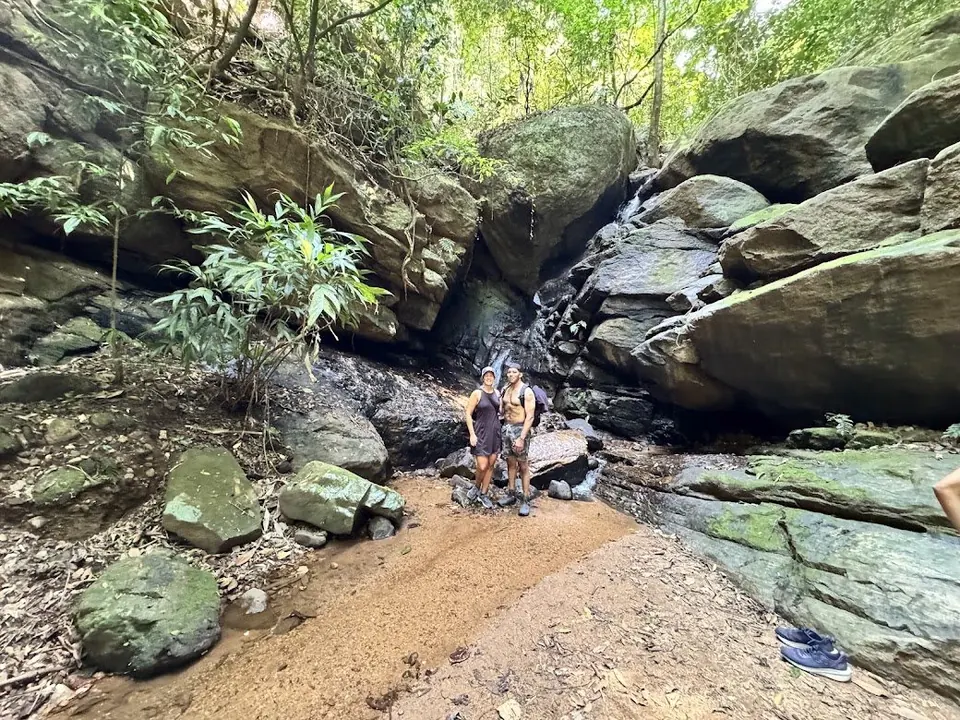 Heading up the ravine toward the next falls
Tips:
- It starts early. Ours was at 8 AM, so don't plan a late night in Lapa the night before.
- Wear shoes that can get wet and grip rock. You'll be climbing over boulders.
- Bring more water than you think you need. Unless you want to drink from a vine.
- Go with a guide. The trail is marked, but you'd walk right past the snake, the palms and the stories.
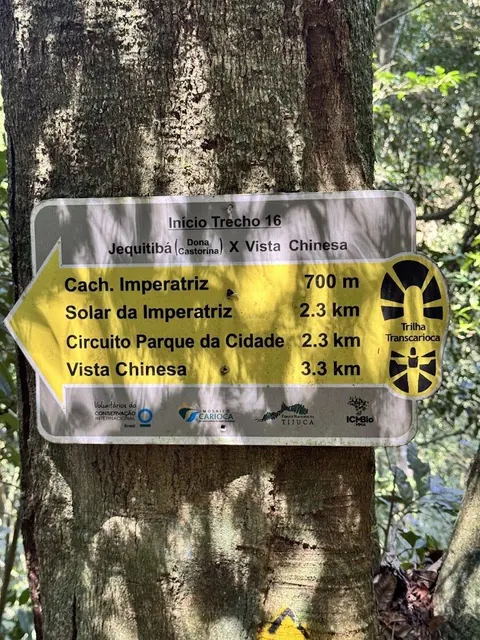 Trail signs along the Transcarioca
Little Africa and the African heritage tour
What I paid: $35 (2023) and $32 a person (2025)
I've done this one twice: on my very first trip, when I went alone, and again in 2025. A good portion of the people in Rio are of African descent, and this tour gets into that history. It was interesting to get that side of Rio's history.
Here's a fact that stuck with me: the Valongo Wharf, right in this neighborhood, was where an estimated 900,000 enslaved Africans arrived in South America. UNESCO made it a World Heritage Site in 2017.
My guide, Gabby, started the tour under a baobab tree. In some African societies, she said, knowledge isn't written in books. It's passed down by voice, with the elders sitting under the baobab. So that's how she taught it. Here's some of what I learned:
- Brazil's economy ran on slavery for almost 400 years. First brazilwood (for red dye), then sugar, then coffee, then gold. Brazil didn't abolish slavery until 1888, more than 20 years after the US.
- The wharf was moved here to hide it. When the Portuguese royal family fled Napoleon and moved to Rio in 1808, the rich people living near the old main wharf complained about seeing the ships unload. So the slave port got moved to this area, with a market, a "hospital" to fatten people up before sale, and a mass grave called the New Blacks Cemetery.
- Then they paved over it. In the early 1900s the mayor wanted Rio to be the new Paris and covered the wharf. Nobody saw it again until 2012, when construction crews dug it up.
- Samba used to be a crime. You could be arrested just for carrying an instrument. Samba made it out thanks to a woman named Tia Ciata, whose house became the safe spot where the first recorded samba was written.
There's also a huge mural by the artist Kobra, painted for the 2016 Olympics, with five faces for the five continents.
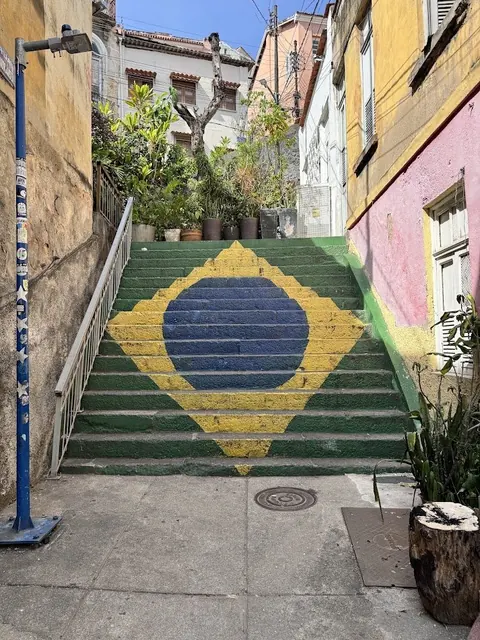 Steps painted like the Brazilian flag
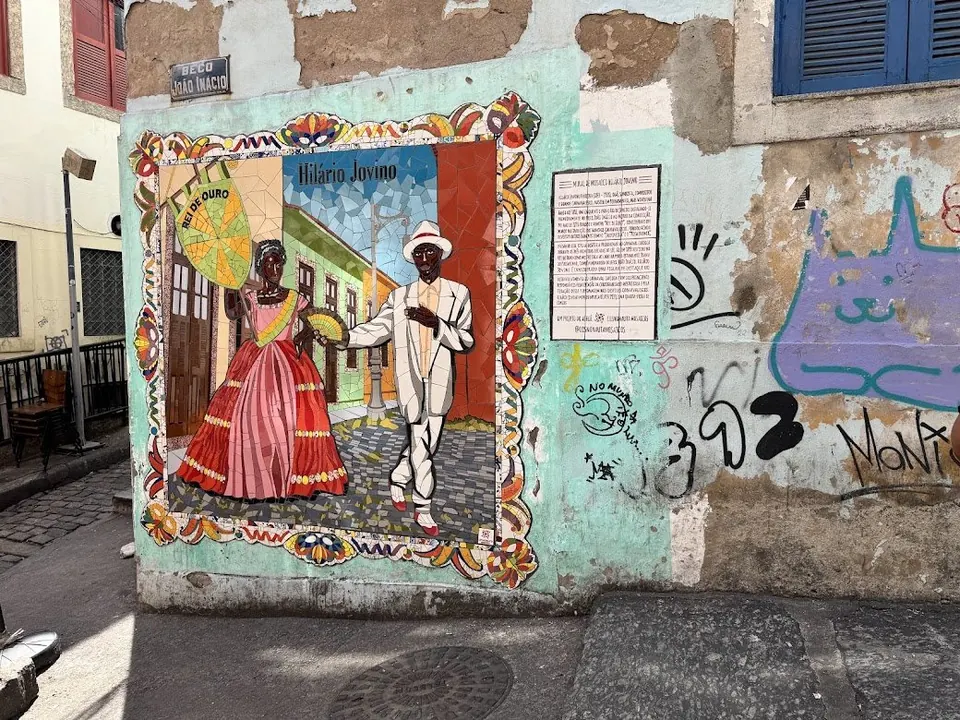 One of the murals in Little Africa
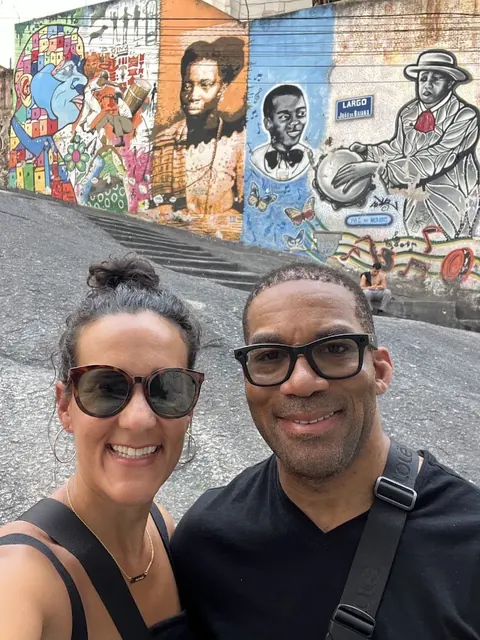 Me and my girlfriend on the 2025 tour
Samba at Pedra do Sal (it's free)
What I paid: $31 for a tour (2023). Don't do what I did.
My first time in Brazil I didn't know anything about Pedra do Sal, so I paid for a samba tour. On Monday nights you can just go see the samba there for free. It's right in Little Africa, so it pairs well with the tour above.
Kids playing street soccer on the cobblestones near Pedra do Sal one night.
The name means "salt stone." The Portuguese traded salt here, and there was a slave market right next to it. That's why people call it the birthplace of samba: the African rhythms met the European sounds right on these steps. The official Pedra do Sal page lists Mondays, Fridays and Saturdays, starting around 6 PM.
Lapa at night
What I paid: $39 for a samba night with locals (2023)
Lapa is where the nightlife is. I met a group of people there and got to hang out in Lapa.
I also did a samba night in Lapa. It was my first time ever dancing samba, and I didn't know anything about it. Our host walked us through the roda de samba, the samba circle, where the musicians sit around a table. There's the cavaquinho, which looks like a ukulele, a seven-string guitar, and the surdo, the big drum they call the heartbeat. Then there's the pandeiro and the tamborim, a small tambourine you hit with a stick. It's a cheap night and a great way to understand what you're hearing at Pedra do Sal.
The Selarón Staircase in Lapa
What I paid: free
I've been every single trip. It's right there in Lapa, with restaurants at the bottom and people selling stuff. The stairs go up pretty high, so if you're not fit, it's a workout.
If you're not familiar with it, the Escadaria Selarón is 215 steps covered in tiles that a Chilean artist, Jorge Selarón, collected from all over the world. He kept adding to it for over 20 years.
The Royal Portuguese Reading Room downtown
What I paid: free
On my first trip I went to the Real Gabinete Português de Leitura in Centro, the Royal Portuguese Reading Room. Portuguese immigrants started it back in 1837, and the reading room is floor-to-ceiling dark wood and old books. It's at Rua Luís de Camões 30.
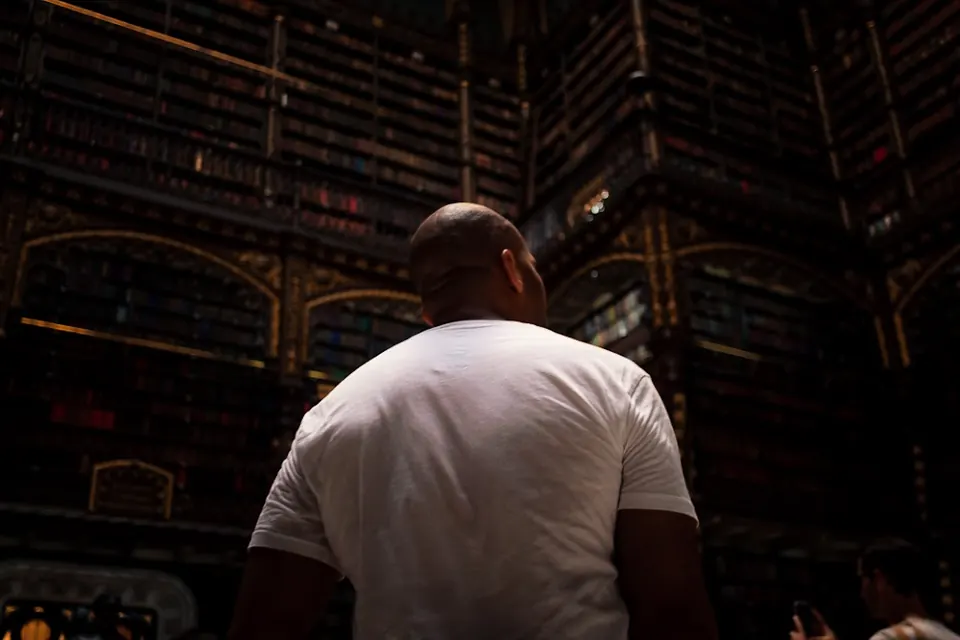 Inside the Real Gabinete
Helicopter over Christ the Redeemer
What I paid: $263 (2023)
I did this once. It was definitely fun, and I don't regret it, but I don't know if I'd do it again unless I was with someone who really wanted to go. It is the cheat code for seeing Cristo Redentor if you don't want to deal with the stairs.
A capoeira class
What I paid: $14 (2023, in Botafogo)
That was a fun class. For me, though, I'd break my bones doing it. It's just awesome to watch people play capoeira and do the ginga. I really liked that. For $14, it's the cheapest thing on this list that isn't free.
The beaches
Every place I've stayed in Rio has been in Leblon, close to the beach. Leblon and Ipanema are one long stretch of sand, with the Two Brothers mountain (Dois Irmãos) at the Leblon end. Copacabana is a short Uber away.
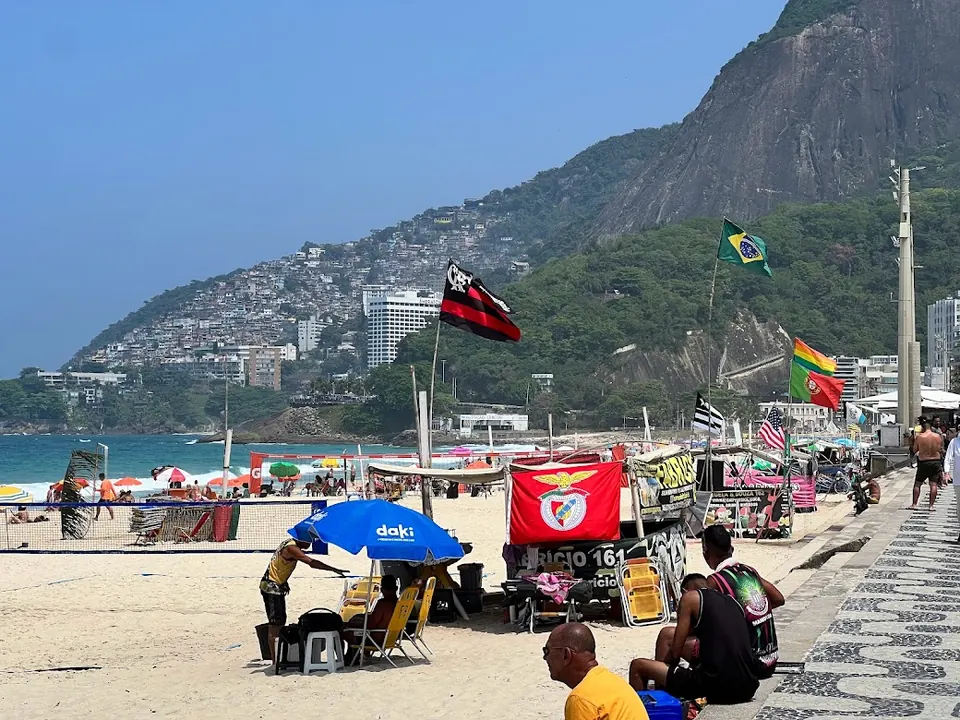 Leblon beach
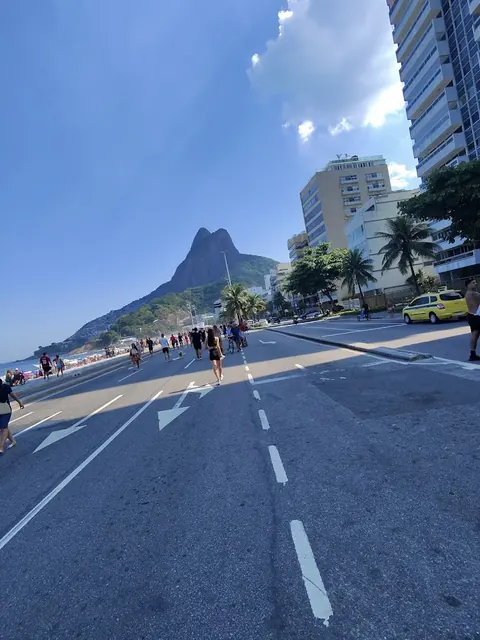 Looking down the Leblon waterfront toward Two Brothers
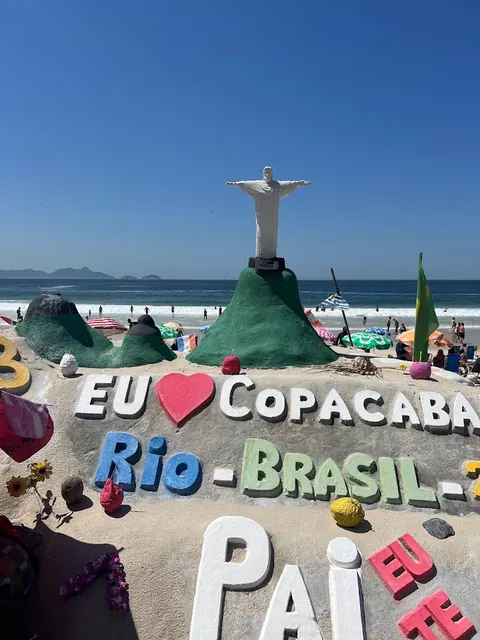 Copacabana
A Flamengo game at Maracanã
We landed in Rio the morning of September 18, 2025, and that same night my girlfriend and I were at Maracanã to watch Flamengo play Estudiantes from Argentina in the Copa Libertadores quarterfinals. If you're not familiar with the Libertadores, it's South America's version of the Champions League. Flamengo won 2–1. I wore a Flamengo shirt for it.
It was super fun and super live. I'd never seen anything like it. Watching Brazilians watch their team play is an experience on its own.
We booked it through Rio de Janeiro by Cariocas Travel. They don't sell tickets on their own. You get the ticket, a bilingual guide and a ride as a package. I knew Monique, one of their guides, from my first trip to Brazil, so I hit her up about this one. She told me there was a game the day we were landing and that I had to make a decision fast, because the quarterfinal was selling out.
Kickoff was 9:30 PM, and they picked us up in Leblon at 5:45. That sounds early until you see Rio traffic on a game night. They also registered us ahead of time, because you get into Maracanã with a biometric (face) check, not a paper ticket.
What they told us before the game:
- No food, even sealed. Water's fine in a clear plastic bottle, but they take the cap.
- No glass, alcohol, perfume, umbrellas or professional cameras. Your phone is fine.
- Bring a copy of your passport, and expect a security check at the gate.
- Wear the right colors. Red and black for Flamengo. Don't show up in the other team's colors. Neutral is fine if you're not picking a side.
- The stands inside sell food, drinks and jerseys, and they take cards and cash.
 Maracanã at night
Tap to play (sound on): the Flamengo section before kickoff.
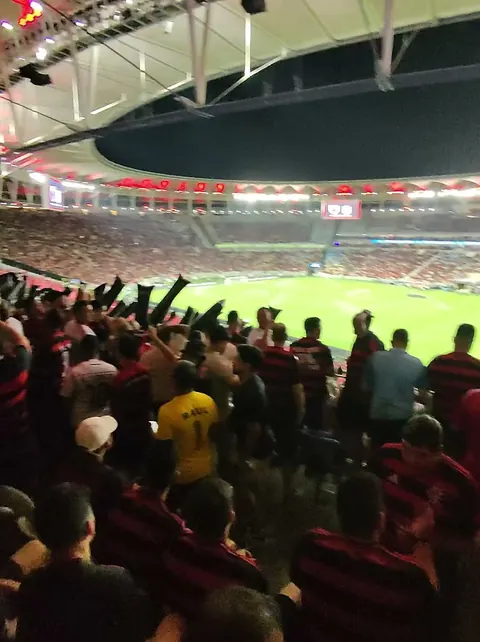 The Flamengo crowd
Watching a BJJ tournament
If you train, check the CBJJ calendar before you book, because Rio hosts some big ones. In September 2023 I watched my friend Diego Bispo, the black belt I met on the flight down (that story is in my Rio safety post), win silver at the Brasileiro Sem Kimono, Brazil's national no-gi championship. It was at the Arena da Juventude in Deodoro, out in the west zone. I went back to the same arena for another CBJJ tournament on my 2024 trip.
 The mats at the Brasileiro Sem Kimono, 2023
 Diego's silver medal
Where I eat after all that
- Príncipe de Mônaco, an old-school seafood joint on Rua Miguel Lemos behind Posto 5 in Copacabana. My uncle and I went a few times.
- Yayá in Leme, for Afro-Brazilian food. Really good.
- Clan BBQ on Rua Dias Ferreira in Leblon, a barbecue spot near where I stayed. It's in the Michelin Guide.
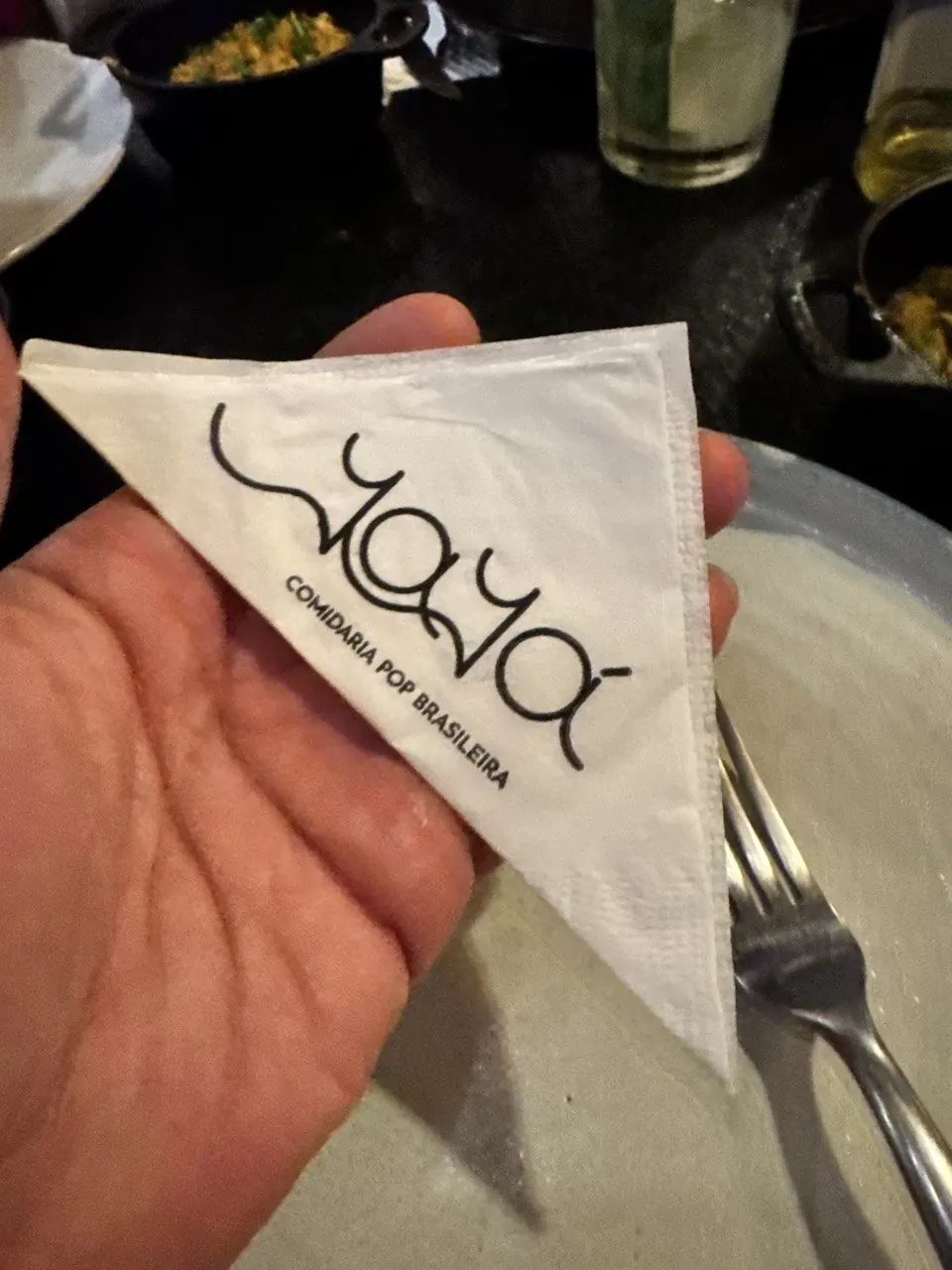 Dinner at Yayá in Leme, September 2025
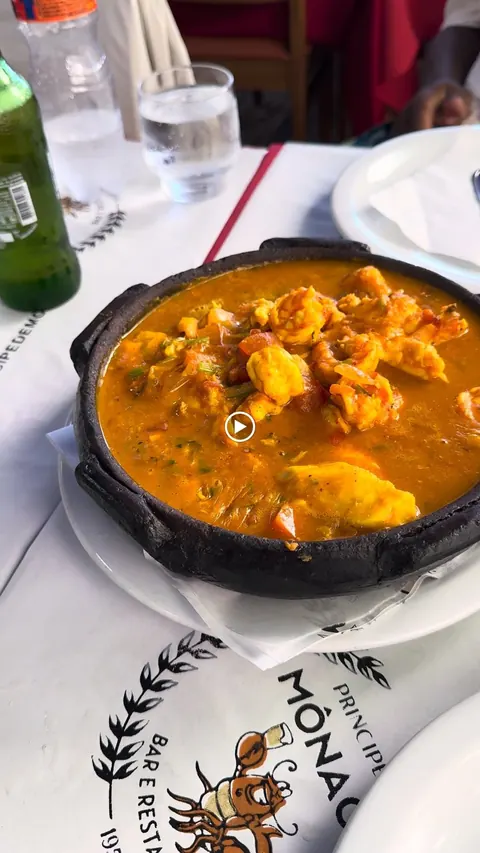 Moqueca at Príncipe de Mônaco
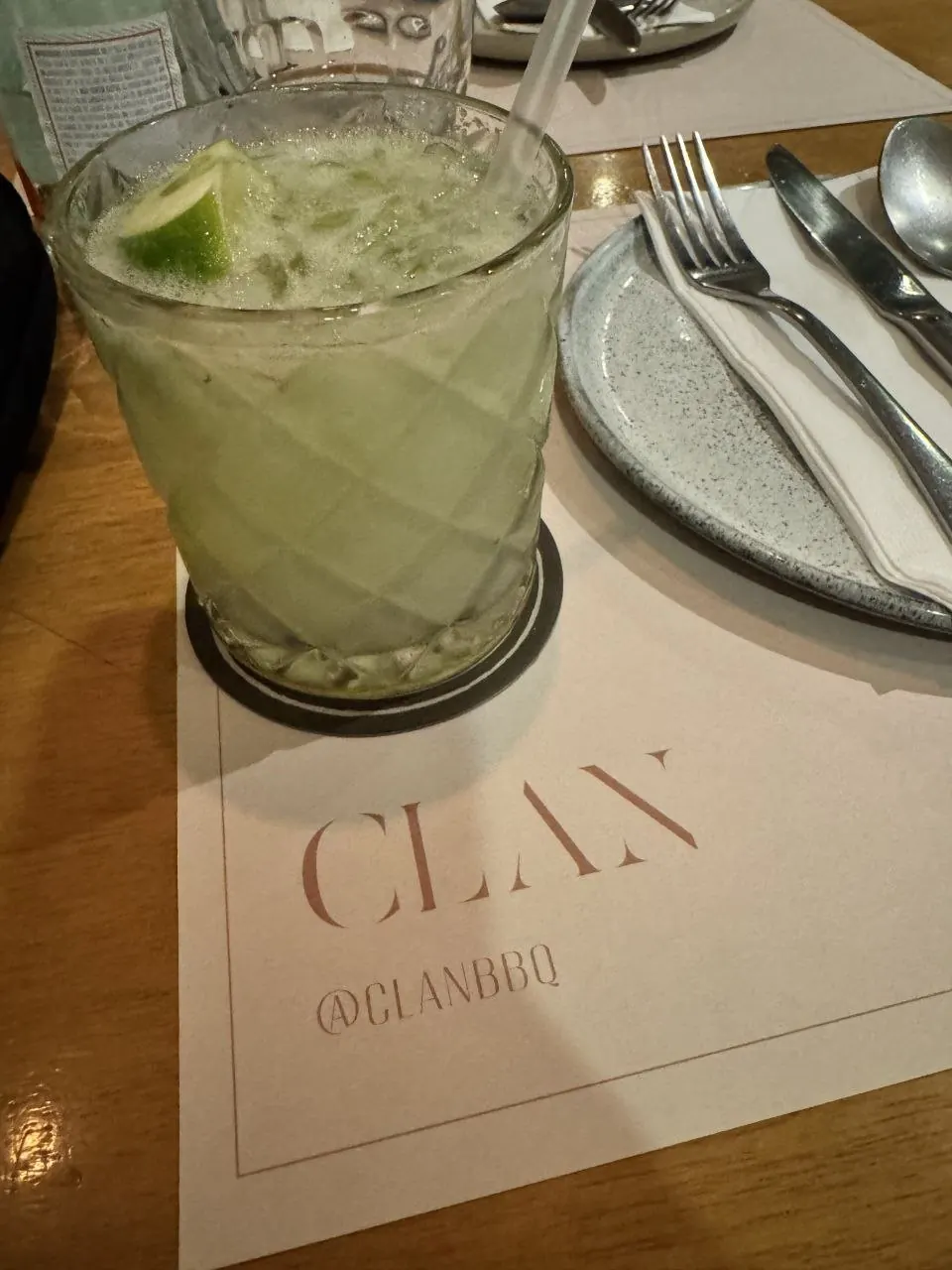 A drink at Clan BBQ in Leblon